A product video production company in India serving exporters and manufacturers faces a very different brief from consumer advertising: the videos must sell to distributors who think in margins and reorder cycles, and perform on noisy exhibition floors where a booth has roughly five seconds to stop a passing buyer. This article explains how to plan video assets for both these environments, what footage and formats each demands, and how Indian manufacturers can turn a single production engagement into a complete trade-ready video kit for domestic and international markets.
Why Distributor-Facing Video Is a Different Discipline
Most product videos are built for end consumers, which is exactly why they fail in trade contexts. A distributor watching your video is not asking “does this look desirable?” He is asking “will this move off my shelf, will the margin work, and will this supplier reliably deliver?”
Understanding the search intent behind trade video queries matters here too. Businesses searching for a product video production company in India for exhibition use are looking for proven export-market experience, not cinematic showreels. The content itself must reflect that same commercial pragmatism.
A product video for distributors should therefore answer, quickly and visually:
- Volume readiness: production lines running at capacity, not hand-assembled samples
- Consistency: the thousandth unit looking identical to the hundredth
- Packaging and palletisation: how the product ships, stacks and survives transit
- Certification cues: ISI marks, CE markings, ISO registrations shown in context
- Commercial flexibility: SKU ranges, private-label capability, minimum order quantities presented clearly
None of this requires dull execution. It requires disciplined execution, where every beautiful shot also carries commercial information.
What an Exhibition-Ready Video Must Survive
International trade exhibitions, whether in Delhi, Dubai, Frankfurt or Canton Fair, impose conditions no living room ever will. Your video competes with footfall noise, glare, interruptions and audiences who watch for seconds, not minutes. Effective trade show video production plans for these realities from the storyboard stage.
Design for the Five-Second Test
Booth visitors decide almost instantly whether to stop. The video’s opening seconds should show the product in action immediately, no logos animating, no corporate montages, no slow builds. The strongest exhibition videos open with the single most arresting thing the product does, then layer explanation beneath it.
Build for a Silent Hall First
Exhibition floors are loud. Videos must communicate with audio muted, which means:
- Bold on-screen text carrying key claims and specifications
- Numbered feature callouts viewers can follow visually
- Subtitles for any spoken segments as standard, not an afterthought
Loop Without an Obvious Beginning
Visitors arrive mid-playback constantly. Successful exhibition edits are structured as seamless loops, so a viewer joining at any point is inside the story within seconds. This single structural choice separates amateur booth reels from professional ones.
Respect the Screen and the Stand
Ask where and how the video will play. A 4K 55-inch portrait screen at a booth, a tablet held by a sales rep, and a projector in a seminar hall each need different framing, contrast and text sizing. Producing one aspect ratio and hoping for the best wastes the investment.
The Full Video Kit Every Exporter Should Carry
Rather than a single film, treat exhibition preparation as assembling a complete asset kit. Here is a structure that works across sectors:
| Asset | Purpose | Typical Length |
| Booth loop film | Attract and hold passing footfall | 60 to 90 seconds, silent-ready |
| Distributor pitch film | Formal meetings at the stand or office | 3 to 4 minutes with sound |
| Product-in-action clips | Line-by-line demonstration on tablets | 20 to 40 seconds each |
| Manufacturing capability film | Build supplier confidence in scale and QC | 4 to 5 minutes |
| Testimonial clip | Existing buyers or partners on camera | 45 to 60 seconds |
| Country-specific variants | Localised subtitles, compliance callouts | Versions of the above |
This kit structure directly supports export marketing video goals: the booth loop pulls people in, the pitch film converts the conversation, and the capability film closes the trust gap that foreign buyers feel when dealing with a supplier across borders for the first time.
Shooting Product Video for Global Audiences
International buyers bring assumptions shaped by their own markets, and production choices should anticipate them.
Cast and context should match the target market. A product demonstrated solely in an Indian setting may need supplementary footage for European or Gulf distributors, or at minimum, styling that reads as internationally neutral. Nothing exoticises, nothing excludes.
Standards vary by region. Electrical goods, food-contact products and safety equipment all carry region-specific certifications. A competent product demonstration video for export leads with the certification relevant to that market, which means versioning graphics per territory rather than re-editing endlessly.
Colour and specification honesty is non-negotiable. A distributor approving an order partly based on your video will inspect samples against it. Colour-accurate grading and truthful finishes protect relationships that took years to build.
Production Planning: One Factory, Many Assets
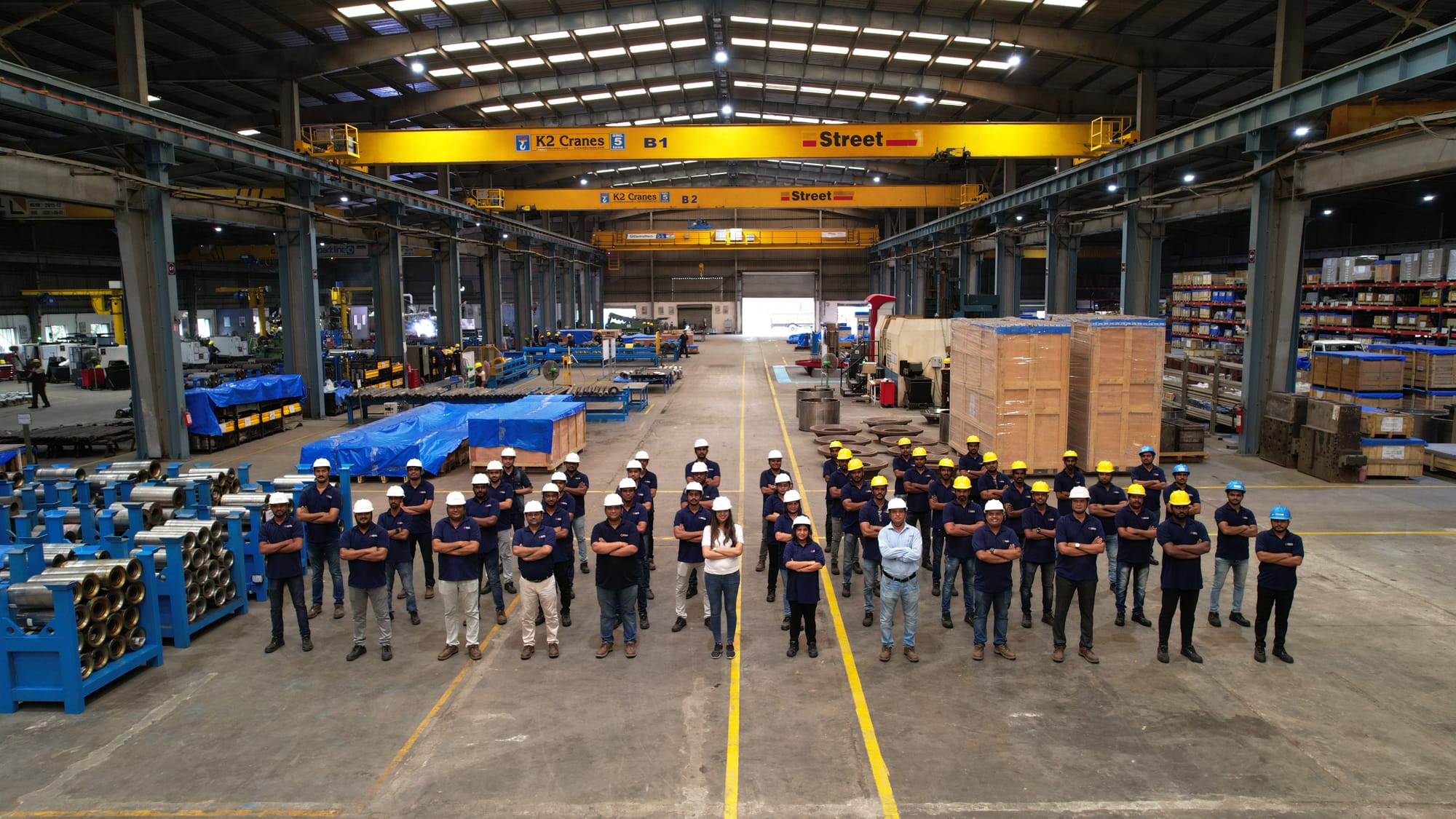
The economics of trade video work only when footage is planned holistically. A factory shoot for an exporter should capture, in one production window:
- Machinery and process footage for the capability film and manufacturing B-roll
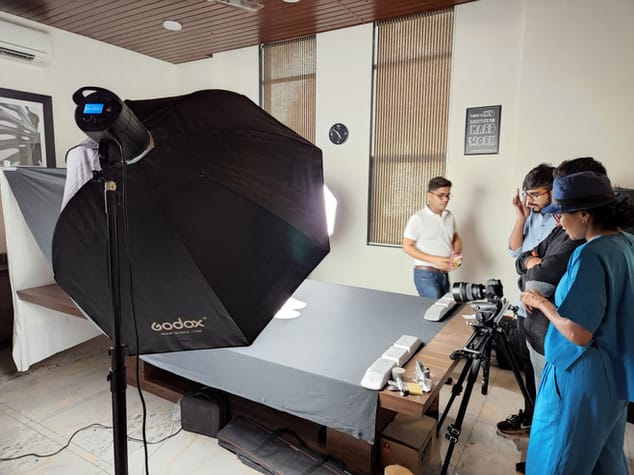
- Studio-grade product beauty shots for booth loops and catalogues
- In-use demonstration footage of the product performing its function
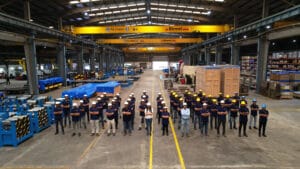
- Warehouse, packing and dispatch footage proving logistics readiness
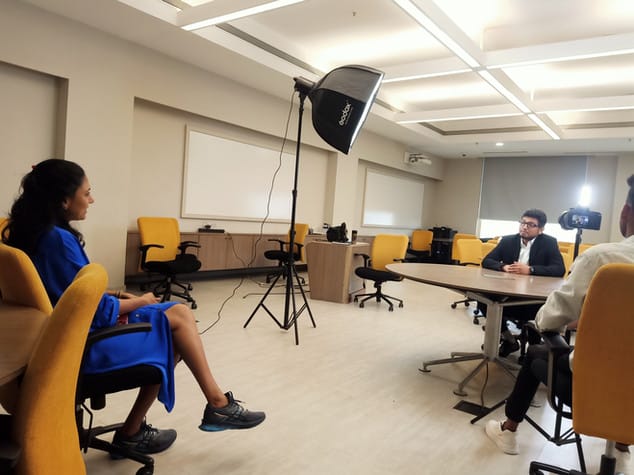
- Leadership and QA interviews for credibility segments
- Photographic stills for print collateral and digital listings
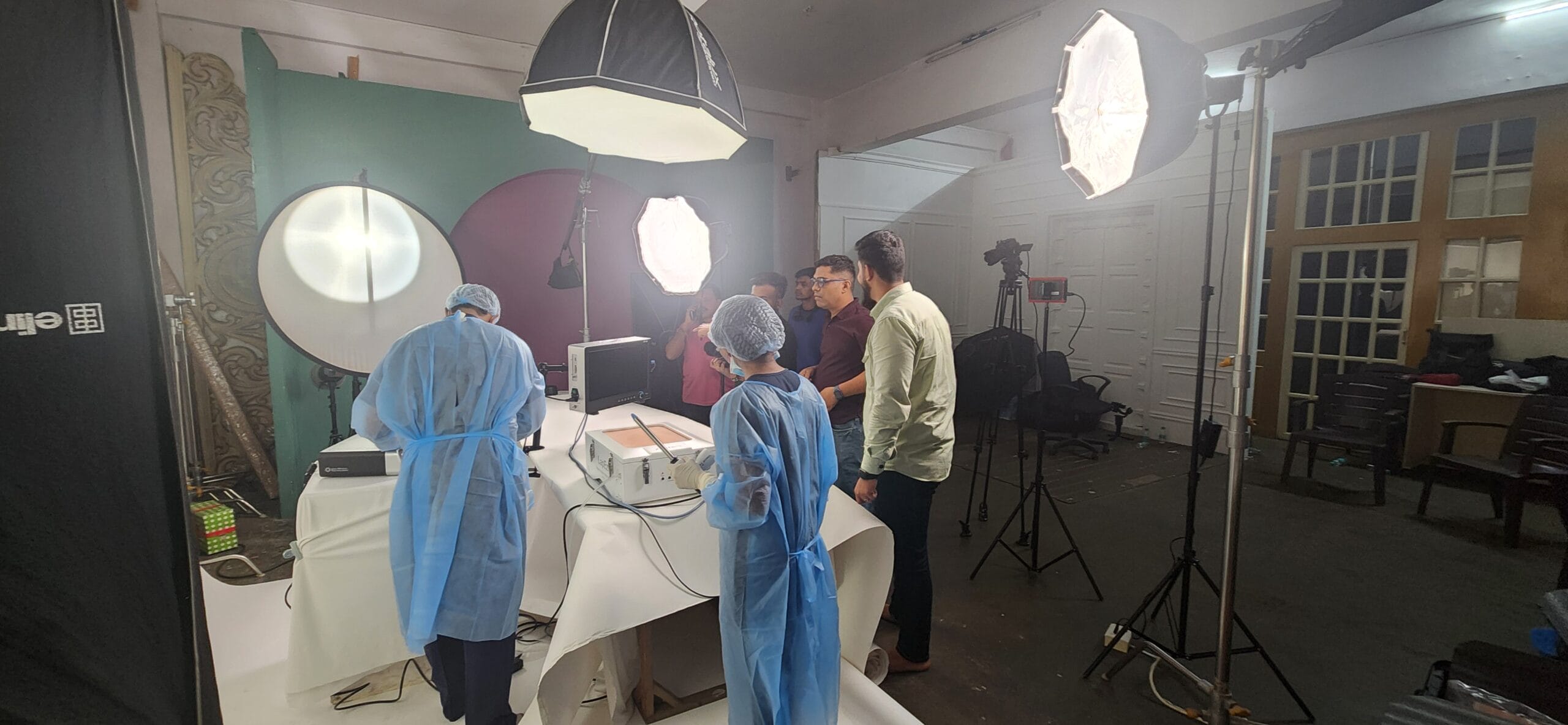
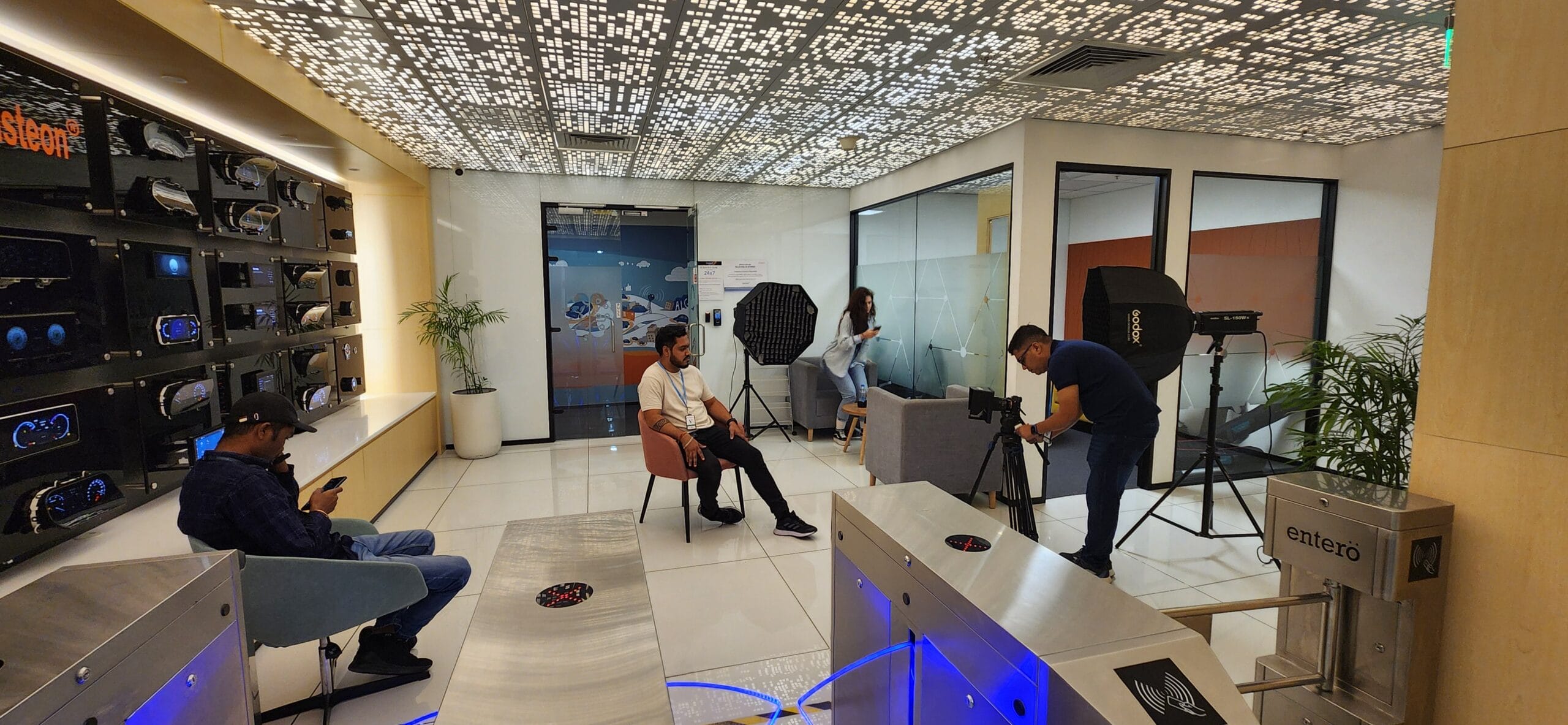
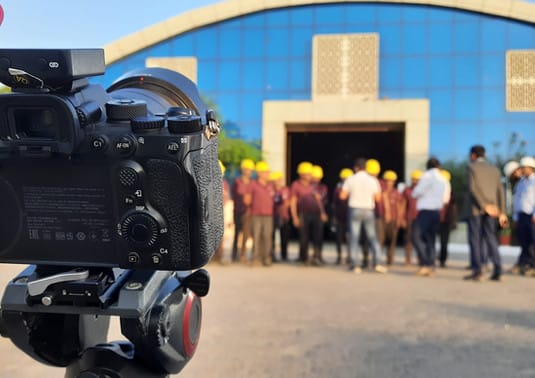
Splitting this across multiple engagements multiplies mobilisation costs and fragments visual consistency. Any serious industrial video production plan treats the factory visit as a content harvest, where every hour of setup yields assets for six distinct purposes.
Post-production then branches: the booth loop is cut rhythmically and almost wordlessly, the distributor film adds commercial narration and data overlays, and the capability film goes deeper into process and quality infrastructure. Same footage, three disciplines, three results.
Logistics of Using Video at International Exhibitions
Practical deployment matters as much as production quality, and experienced exporters plan it:
- Local copies on multiple devices: USB sticks, tablet storage and cloud backups, because booth wifi fails at the worst moment
- Compressed versions for WhatsApp and email that follow up conversations within hours, while interest is warm
- QR codes on stand graphics linking to hosted videos, capturing visitors who prefer to browse privately
- Screen-safe formatting tested on the actual display hardware before departure, not at the venue
One often overlooked point: post-exhibition follow-up is where video pays for itself. A distributor met in Mumbai on Tuesday watching the pitch film again in São Paulo on Thursday is a warmer lead than any brochure will produce.
Bringing It All Together
Selling through distributors and international exhibitions demands video built on commercial logic: speed in the first five seconds, silence-proof communication, certification-forward messaging and a complete kit rather than a single film. Plan the shoot as one harvest producing many assets, versions for each market, and equip the follow-up as carefully as the booth.
We at RedRagaa work with Indian manufacturers and exporters whose growth depends on convincing buyers they may never meet face to face. Our team plans product, capability and exhibition video kits around how distributors actually buy, and we version each asset for the markets and screens it will encounter. If an international trade exhibition is on your calendar, talk to us at RedRagaa early in your planning, because the exporters who get the most from video are the ones who build the kit before the booth is booked.
Frequently Asked Questions
1. What videos should a company prepare for an international trade exhibition?
A booth loop film, a distributor pitch film, short product-in-action clips, a manufacturing capability film and a testimonial clip, forming one complete kit.
2. How long should a trade show booth video be?
Sixty to ninety seconds, structured as a seamless loop that reads well with the sound muted and no clear beginning.
3. Can one video work for both distributors and end consumers?
Rarely. Distributors need margin, volume and supply-chain proof, while consumers need desire and simplicity, so separate cuts perform far better.
4. Do exhibition videos need subtitles?
Yes. Exhibition halls are loud and international audiences are multilingual, so on-screen text and subtitles are essential, not optional.
5. How should product videos be adapted for different export markets?
Localise subtitles, lead with the certifications each region recognises and adjust styling and context to the target market’s expectations.
6. How long before an exhibition should video production begin?
Eight to twelve weeks, covering scripting, shooting, post-production, translations and testing on the actual booth hardware.
7. Can a single factory shoot produce all these video assets?
Yes, with a planned shot list covering process, product, packaging, dispatch and interviews, one production window can supply the entire kit economically.