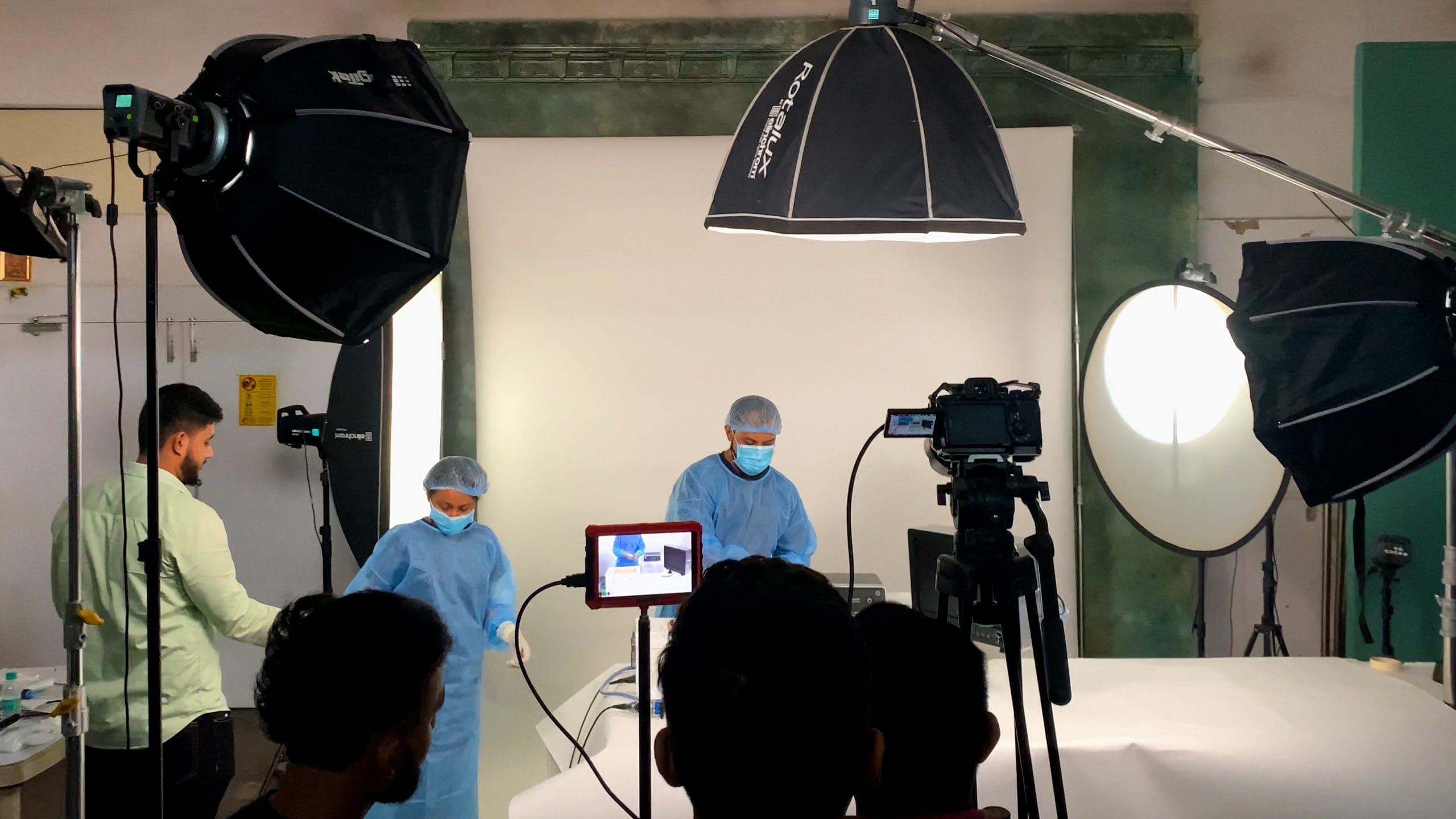

University video production services exist to solve a very specific communication problem: universities compete for students, faculty, funding and industry collaborations, yet most of what makes them credible is invisible to someone scrolling a website. A well-planned video portfolio puts a university’s laboratories, corporate tie-ups and academic record on screen, which is why institutions that invest in professional video consistently report stronger admissions enquiries and donor engagement. This article explains, step by step, how specialist video teams should present research facilities, industry partnerships and academic achievements in a way that wins trust from prospective students, parents, ranking bodies and partner organisations alike.
Why Generic Campus Tours No Longer Work
For years, higher education marketing defaulted to the same format: drone shots of the campus gate, students laughing on the lawn, a closing shot of the library. Prospective students have seen hundreds of these. So have their parents, who are often the real decision makers and who judge institutions on outcomes, safety and credibility rather than atmosphere.
What actually differentiates a university today is substance: accredited programmes, funded research, patented innovations, industry-embedded curricula and graduate placement records. A modern campus video production strategy must surface that substance on screen. The three pillars below show how.
Presenting Research Facilities Without Turning Them Into Slideshows
Research infrastructure is expensive, and presenting it well requires treating the laboratory the way a documentary filmmaker treats a protagonist, not a backdrop.
Lead With the Question, Not the Equipment
Viewers connect with purpose before hardware. Rather than opening on a scanning electron microscope, open on the problem the equipment solves: cleaner water, faster drug screening, safer structures. Then bring the viewer into the lab as the place where that problem is being attacked. The equipment gains meaning because it now has a mission.
Show Activity, Never Empty Rooms
An empty lab reads as a showroom; a working lab reads as proof. Practical techniques include:
- Researchers mid-process, adjusting instruments, logging data, conferring over results
- Time-lapse sequences of long experiments compressed into watchable moments
- Macro detail shots of instrumentation, samples and screens that signal genuine technical depth
- Student participation, undergraduates pipetting or operating equipment, which reassures parents that students touch the facilities, not just walk past them
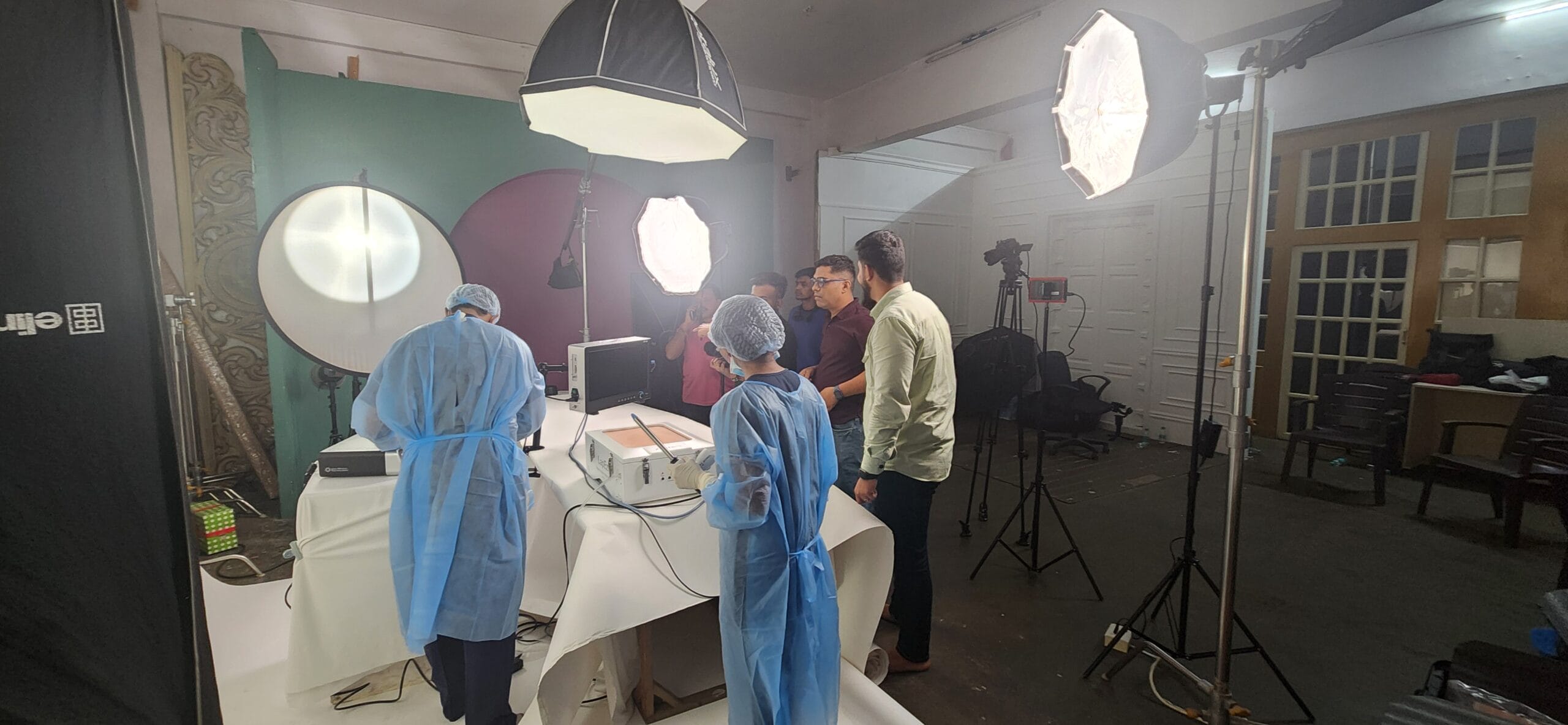
For heavily regulated environments, an experienced education video production team plans around access permissions, biosafety rules and equipment downtime well in advance, because discovering a lab is off-limits on shoot day wastes a budget no institution can justify.
Quantify Wherever Possible
Numbers anchor credibility on screen: square footage of research space, count of funded projects, number of patents filed. Animated overlays work well here, but the figures must be verifiable and consistent with what the university publishes elsewhere, because accreditation reviewers and journalists increasingly cross-check video claims.
Presenting Industry Partnerships as Living Relationships
Industry tie-ups are among the strongest signals a university can send, and also among the most poorly presented. A wall of partner logos communicates nothing about whether the partnership is alive.
Make the Partner Speak, Not Just Appear
The single most persuasive asset in a university promotional video about partnerships is a corporate partner talking on camera about why they work with the institution. A plant head describing interns who arrived job-ready, or an HR director explaining a co-developed curriculum module, carries authority no in-house narration can match. Aim for:
- Short interview clips with partner-side leaders, kept honest and specific
- Footage of students inside partner workplaces: internships, site visits, live projects
- Placement moments, offer letters, onboarding days, told as small human stories
Show the Pipeline, Both Directions
Partnerships run in two directions: students going into industry, and industry problems coming into the classroom. Films that show both, a student debugging at a partner’s facility in one scene, a company engineer guest-teaching in the university’s studio in the next, present the relationship as a genuine ecosystem rather than a certificate on a wall.
Presenting Academic Achievements With Credibility and Warmth
Academic achievement is the pillar universities most often present badly, usually as a rapid-fire stat reel that viewers forget instantly. Achievements persuade when they are anchored to people.
Tell One Story Deeply Rather Than Ten Shallowly
One graduating student who won a national research grant, shown from her first proposal draft to the award ceremony, communicates more institutional strength than ten floating statistics. Rank lists, topper counts and university rankings still belong in the film, but as supporting captions within human stories rather than as the story itself.
Structure Achievements Across the Academic Journey
A clear framework helps viewers absorb the record without overload:
- Entry credibility: accreditations, rankings, faculty qualifications
- During study: hackathon wins, conference publications, incubator selections
- Outcome proof: placements, higher studies admissions, entrepreneurship, alumni trajectories
This journey structure also maps neatly onto how parents actually evaluate institutions, which is why experienced higher education video teams storyboard around it rather than around department silos.
Adapting the Portfolio for Every Audience and Platform
The same content system serves very different audiences, and versioning should be planned at the scripting stage:
| Asset | Primary Audience | Ideal Length |
| Master institutional film | Prospective students and parents | 3 to 4 minutes |
| Research showcase cut | Funding bodies, academic partners | 5 to 6 minutes |
| Placement and partnership cut | Recruiters, industry collaborators | 2 to 3 minutes |
| Vertical shorts | Instagram, YouTube Shorts reach | 15 to 45 seconds |
| Programme-specific cutdowns | Individual department pages | 60 to 90 seconds |
Recruitment fairs, embassy delegations, NIRF-style submission materials and open house events each draw from this pool. Planning deliverables before the shoot, as with any professional corporate video production engagement, costs a fraction of reshooting later.
Compliance, Consent and Sensitivity in Education Filming
Universities carry obligations consumer brands do not. Before any camera rolls, the production plan should cover:
- Written consent for every identifiable student, with particular care for minors
- Institutional approval for laboratory, hospital and research imagery where disclosure rules apply
- Accurate representation of facilities, showing what genuinely exists, at its genuine standard
- Faculty review of any technical claims, so the film survives scrutiny from academic audiences
These safeguards protect the institution’s credibility, which is the entire asset the film is built to enhance.
Bringing It All Together
A university’s real differentiators, research that matters, partnerships that are alive, and achievements that are real, deserve presentation built on documentary substance rather than campus beauty reels. Lead with purpose, show people doing genuine work, quantify honestly and version deliberately for each audience.
We at RedRagaa work with educational institutions that want their substance to be seen, not just claimed. Our team plans research, partnership and achievement films around the audiences that actually make decisions, students, parents, recruiters and academic bodies, so every minute of footage earns its place. If your institution is planning a video portfolio, talk to us at RedRagaa before the next admission cycle, and let’s turn what happens on your campus into the reason people choose it.
Frequently Asked Questions
1. What does university video production typically include?
Master institutional films, research showcases, placement and partnership films, programme cutdowns and vertical social versions, all planned as one content system.
2. How long should a university promotional video be?
Three to four minutes for the master film, with shorter cutdowns of 15 to 90 seconds for social platforms and department pages.
3. Can students and staff be filmed without legal issues?
Yes, with written consent for every identifiable person and institutional approvals for restricted areas like labs and hospitals.
4. How do you film inside research laboratories?
Through advance planning: access permissions, safety inductions, scheduling around experiments and shooting real activity rather than staged setups.
5. Should industry partners appear in university videos?
Absolutely. A partner speaking on camera about internships and collaborations is among the most persuasive proof a university film can contain.
6. How often should a university refresh its video content?
Annually for social content, and every two to three years for the master film, or sooner after major accreditations, rankings or campus expansions.
7. Do universities need separate videos for admissions and industry recruitment?
Ideally yes. Parents respond to outcomes and student life, while recruiters respond to research capability and talent pipelines, so each audience needs its own cut.